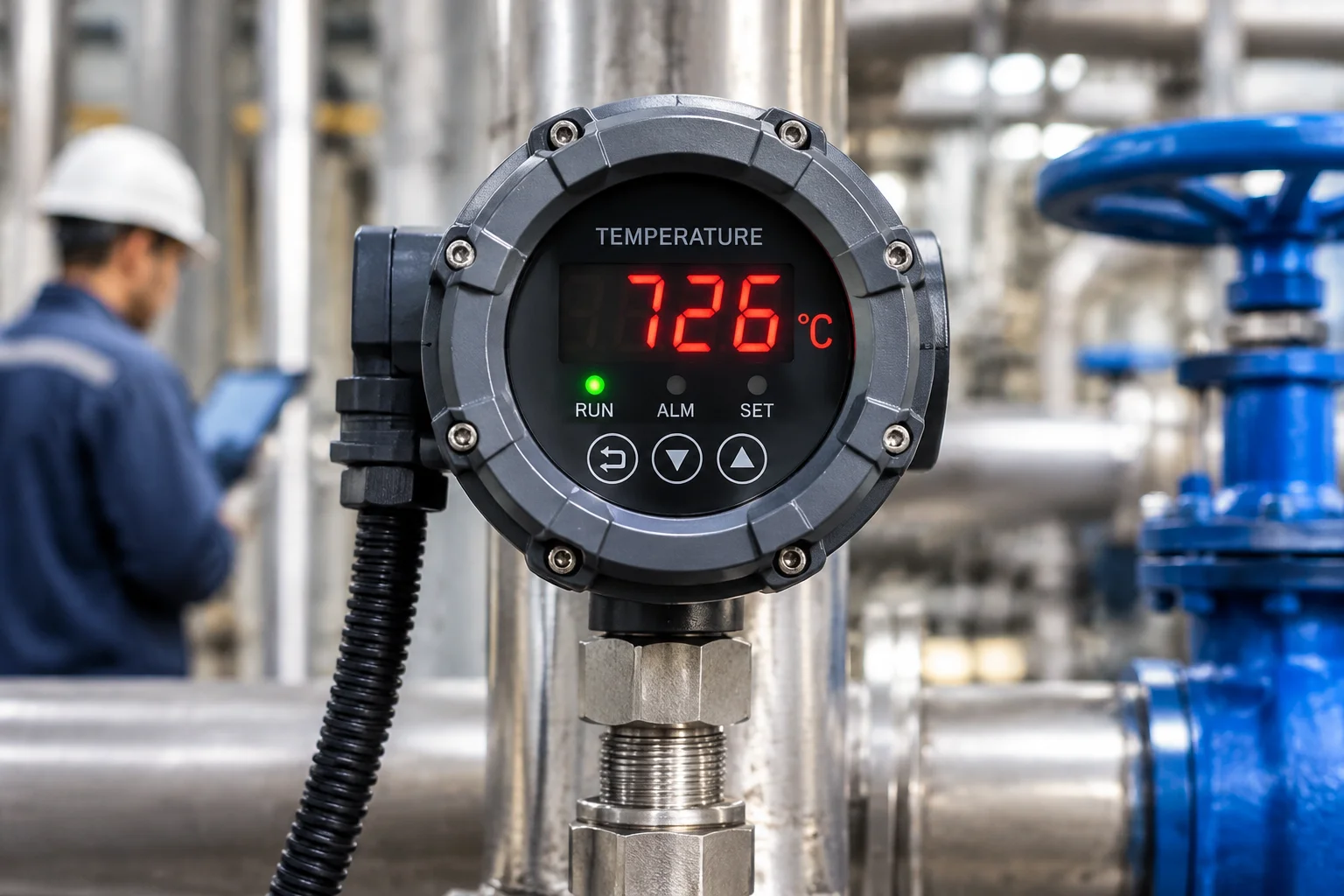
01 Understanding Thermal Baseline Noise
Temperature regulation systems in precision manufacturing frequently exhibit slight oscillatory behavior due to heater cycling, ambient air shifts, and sensor sampling intervals. Operational teams often mistake these routine minor fluctuations for mechanical failures or calibration errors. In reality, a control chart reveals that these routine variations fall entirely within calculated statistical bounds.
By plotting temperature measurements chronologically on an X-bar or Individuals chart, quality engineers can establish realistic control limits based on actual process capability rather than arbitrary specification thresholds. When the process operates within control limits, attempting to manually tweak thermostat settings actually increases system variance—a classic mistake known as over-adjustment.
Tampering with a stable thermal process in response to normal background variation consistently increases overall variability rather than reducing it.
Process Engineering Review
Discuss your statistical variation observations with an atlas specialist.
02 Identifying Genuine Thermal Signals
While routine noise requires no intervention, genuine operational anomalies must be identified and corrected quickly. Statistical process control rules provide definitive criteria for detecting non-random patterns in temperature logs:
- Points Beyond Control Limits: A single temperature reading exceeding 3-sigma limits indicates an immediate disruption, such as a failed heating element or coolant valve lockup.
- Sustained Temperature Shifts: Nine consecutive readings on one side of the center line indicate a subtle step change in environmental or power conditions.
- Monotonic Trends: Six consecutive increasing or decreasing data points reveal progressive degradation, such as fouling on heat exchanger surfaces.
03 Stability Versus Specification Compliance
A critical distinction in process analysis is that control stability does not guarantee customer specification compliance. A temperature control loop can be statistically stable and predictable while operating entirely outside target engineering tolerances if the baseline offset is misconfigured.
First verify statistical control to prove that the heating process is predictable. Once stability is established, evaluate capability metrics (Cp and Cpk) against engineering specification limits to determine if hardware modification or setpoint adjustment is necessary.
Need Guidance on Process Stability Checks?
Connect with our engineering specialists to review your control charts, evaluate subgroup strategies, or diagnose recalcitrant process variation.
Consult an AnalystFrequently Asked Questions
If the drift remains inside statistical control limits, it represents common-cause variation inherent to the equipment. Adjusting setpoints in response to common-cause noise introduces additional variance and destabilizes the control system.
Individuals and Moving Range (I-MR) charts are standard when individual readings are taken over time. For high-frequency automated sampling, X-bar and R or X-bar and S charts grouped by rational time intervals are recommended.
No. Stability simply proves consistency and predictability. The process must also be evaluated for capability against engineering specification limits to ensure output meets quality standards.